
Market Perspective
Potential job sector for University graduates: Commodity Market
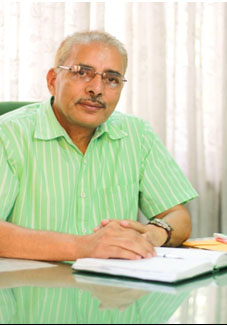
Mr. Madhav Prasad Neupane, Principal,
National College, Center for Development Studies
Institution Offering BDevS, BDFin, BoSS
1. How do you perceive Nepali Commodity Market?
Ans: The idea of the commodity exchange is pretty good but the only problem is that the idea is not properly sold. In the current scenario, when the market is very new and only limited to the precious metals, a lot is yet to be explored. There are several institutions working in this sector but still the idea is not well-understood. There can be viable products like cereals, oils, etc. and other products that can be included in the current product domain but that has not happened.
2. What do you think should be done for the enhancement of the commodity market in Nepal?
Ans: In my view, organizing an event with all the trading companies or may be organizing an exhibition along with the related companies could be a starting point to develop a strong foundation of the commodity market in Nepal.
3. What are the things that you think could improve the commodity sector in Nepal?
Ans: First of all, the prime necessity is, of course, the legislative process which becomes very necessary to upgrade and strengthen the overall market process itself. Besides that, though the sector looks much linked to the banking and insurance sector, it is not seen given must interest by the banking sector. Moreover, the central bank should take a lead and show much concern on this issue but it is very unfortunate that the monetary authority is not seen interested.
4. In the budget this time, the regulation issue of the commodity market in Nepal has been addressed and Securities Board of Nepal (SEBON) has been the proposed regulator. What do you think about this?
Ans: Well, it's a very positive step undoubtedly. But then, a separate institution for the regulation of the commodity market would be much better.
5. Where do you see MEX Nepal in upcoming days?
Ans:I am familiar to the type of facilitation MEX does and I see MEX Nepal in the leading role in the commodity market.
6. How do you think is commodity market contributing to the national economy?
Ans: Looking into the current scenario, the figures seem high but the impact is not as significant as it could have been. The major reason behind the least impact on economy is that the local products and the local producers have not yet been in the commercial environment of the commodity exchanges. There are only few institutions or few people who have been benefitted; on the contrary, the number had to be many.
7. Any recommendations or suggestions to the Exchange that you would like to witness in the Nepali commodity market?
Ans: I don't think I have any kind of expertise in this sector to advise as such about the exchange procedures.
8. Here, we have been talking a lot about the commercializing the agro products and then adding up their value, but the central monetary authority and the insurance companies have not been seen coming up with supporting policies to do so, what do you think is necessary?
Ans: Nepal Rastra Bank (NRB) should come up together with other regulatory agencies necessarily for the development of the overall economy. A strong cooperation between the government, NRB, Insurance Board and the trading sector should be established and then get convinced that a co-ordinated effort can definitely boost the economy.
9. What do you are the viable products that can be accommodated to the trade domain of the commodity exchanges?
Ans: Tea and Cardamom are few of our unique products. Forgetting about making an impact largely straightaway, the focus should be to begin the impact, at least in a small scale in certain strategic areas.
10. How do you think academic institutions can be of any use to the commodity market in the country?
Ans: There can be several usages of the academic institutions in the commodity market - awareness to the final projects. Because the upcoming graduates for the job market are produced by the academic institutions, the awareness among the graduates is very necessary. Besides that, knowledge about this sector will encourage many graduates to develop their own business and a different level of entrepreneurial culture can be developed among the fresh graduates. Also, several researches are required to assure the physical delivery of the local products through the commodity exchanges and those researches can also be conducted with the support of the academic institutions and this has been the practice globally. Final projects are carried out by the students for the completion of their university degrees and if such projects could be used in any way by the commodity exchanges that would be more than beneficial for both the parties.
11. Finally, is there anything you would like to tell us?
Ans: BEST WISHES!